Tempeh for Lifters: The Fermented Protein Brick That Fixes Seitan's Weakness (Plus 4 Recipes)
Affiliate disclosure: Some links on this page may earn us a small commission at no cost to you.
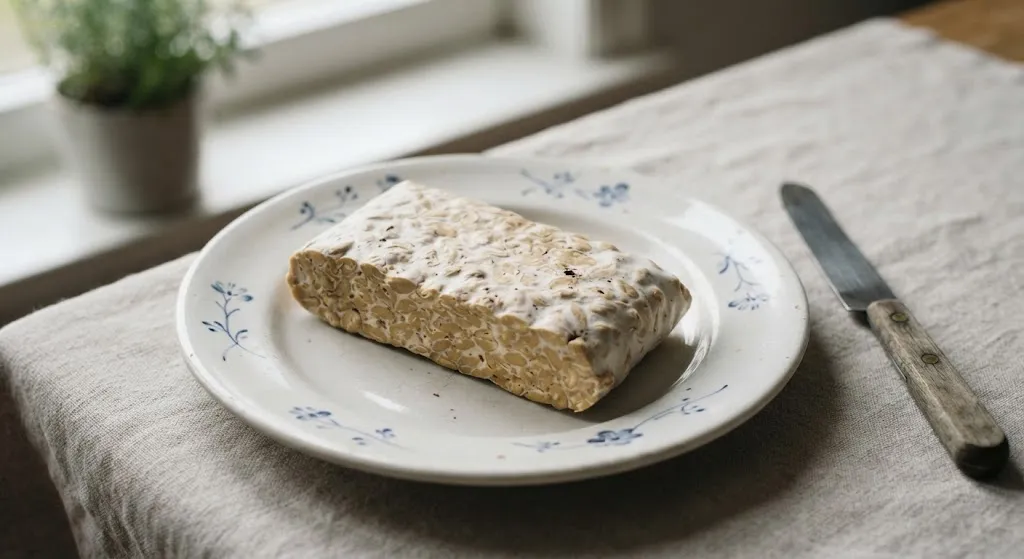
Last week I told you about seitan, the vital-wheat-gluten powerhouse with its one glaring flaw: it’s low in lysine, the amino acid that matters most for muscle building. This week, consider the sequel that fixes the flaw. It comes wrapped in white fuzz that looks mildly alarming.
That fuzz is Rhizopus oligosporus, the mold that ferments whole soybeans into tempeh. If your first encounter with tempeh was biting into it straight from the package and making a face like you’d licked a battery, you are not alone. Unseasoned tempeh tastes like a bitter walnut that holds a grudge. The entire secret to tempeh (the thing nobody tells you at the natural foods store) is that it is a delivery vehicle, not a finished product. It exists to be steamed, marinated, and crisped. Treat it that way and it becomes one of the best muscle-building foods in the entire plant kingdom.
The numbers, because the numbers are the point
USDA’s database lists tempeh at 192 calories and 20.3 grams of protein per 100 grams. A single 8-ounce block therefore gives you roughly 45 grams of protein for about 435 calories. That’s a better protein-to-calorie ratio than extra-firm tofu (about 10g per 100g), roughly on par with cooked chicken breast on a per-calorie basis, and it comes with 9 grams of fiber per 100 grams that chicken can’t offer you.
But the real reason tempeh earns a spot above tofu in the lifter’s fridge is its amino acid profile. Where seitan stumbles on lysine, tempeh, being a whole soybean product, contains all nine essential amino acids in solid amounts, including about 1.4 grams of leucine per 100 grams. The ISSN’s 2017 protein position stand (Jäger et al.) notes that roughly 0.7–3 grams of leucine per meal helps trigger muscle protein synthesis. Eat a 150-gram serving of tempeh in one sitting and you’re sitting at about 2 grams of leucine plus 30 grams of complete protein. The meal itself clears the bar without a single supplement.
Fermentation does the rest. The culture pre-digests the soybeans’ proteins and breaks down antinutrients like phytic acid, which is why tempeh tends to sit lighter in the stomach than the same amount of plain soybeans. It also concentrates B vitamins. In some batches it even produces small amounts of B12 from the fermentation bacteria, though never enough to count as a source. Supplement your B12 like a responsible adult; tempeh is not that.
Cost check: an 8-ounce (227g) block of Lightlife or similar runs roughly $3 to $5 depending on the store. Trader Joe’s is reliably the cheap end; specialty health stores are the painful end. At four bucks a block for 45g of protein, you’re paying about $1.33 per 15 grams of protein. That’s more than dried lentils ($0.40 per 15g, per my earlier cost-comparison piece) but far less than most protein bars, and it actually tastes like food when you cook it right.
The 10-minute trick that changes everything
Steam it first. I mean this. Slice your tempeh into whatever shape the recipe needs, then steam it for 10 minutes before it touches a marinade or a hot pan. Two things happen. The bitterness (the main reason people claim to hate tempeh) mostly cooks out, and the pores open up so it drinks marinade like a sponge instead of wearing it like a coat. This one step is the difference between “I tried tempeh once” and having a second block in the fridge.
Storage basics: unopened tempeh keeps for weeks in the fridge (check the date). Once opened, wrap it tight. It keeps about a week refrigerated, and it freezes well for months, which makes it one of the few fresh proteins you can stockpile.
Macros below are computed from USDA figures (tempeh 20g protein / 192 kcal per 100g, shelled edamame ~12g per 100g, dry red lentils ~24g per 100g) and rounded. Approximate and honest, not lab-grade. Each recipe serves one hungry lifter.
1. Gochujang-Glazed Tempeh Rice Bowls
The gateway recipe. The glaze (sweet, spicy, sticky) is the whole argument, and the tempeh underneath crisps up like it has something to prove.
Ingredients: 100g tempeh, sliced into thin triangles; 1 tbsp gochujang; 1 tbsp maple syrup; 1 tsp soy sauce; 1 tsp rice vinegar; 150g cooked jasmine rice; 60g shelled edamame (frozen, thawed); shredded cabbage and sliced scallions; 1 tsp toasted sesame oil.
Steps:
- Steam the tempeh triangles for 10 minutes, then pat dry.
- Whisk the gochujang, maple syrup, soy sauce, and rice vinegar into a glaze.
- Sear the tempeh in a hot oiled skillet, 3 minutes per side, until golden and crisp at the edges.
- Pour the glaze in and toss for 60 seconds until it lacquers onto every piece. It should look sticky and dangerous.
- Build the bowl: rice, cabbage, tempeh, edamame, scallions, sesame oil.
Macros: ~610 kcal | ~33g protein | ~81g carbs | ~16g fat. The edamame quietly adds ~7g of protein so the tempeh doesn’t have to carry the bowl alone.
2. Smoky Tempeh Bacon BLT
Tempeh bacon is the one restaurant menu item I order out of respect. Somebody at that kitchen figured out the marinade ratio, and I’m stealing it.
Ingredients: 100g tempeh, sliced paper-thin lengthwise (aim for 2mm; a mandoline helps); 1 tbsp soy sauce; 1 tbsp maple syrup; 1 tsp liquid smoke; ½ tsp smoked paprika; 2 slices hearty bread, toasted; ½ avocado, sliced; lettuce and tomato.
Steps:
- Steam the thin slices for 8 minutes (less time for thin cuts), pat very dry.
- Whisk the marinade ingredients; soak the tempeh 15 minutes. Thin slices absorb fast.
- Fry in a slick of oil over medium-high heat, about 90 seconds per side, until deeply browned and curling at the edges. It goes from perfect to burnt fast, so don’t walk away.
- Stack: bread, avocado, lettuce, tomato, a double layer of tempeh bacon, second slice.
Macros: ~615 kcal | ~30g protein | ~65g carbs | ~25g fat. The avocado adds the fat that makes it eat like a real sandwich instead of a protein-delivery project.
3. Red Lentil & Tempeh Curry
For the nights you want one pot and zero decisions. The lentils double as thickener. No roux, no cornstarch, no second pan.
Ingredients: 100g tempeh, crumbled into rough chunks; 40g dry red lentils, rinsed; 80ml light coconut milk; 200ml vegetable broth; 1 tbsp red curry paste; 1 tsp grated ginger; a big handful of spinach; lime and cilantro to finish; cooked rice to serve (optional).
Steps:
- Steam the tempeh chunks 10 minutes, then brown them in oil in a soup pot, 4–5 minutes. Set aside.
- In the same pot, fry the curry paste and ginger for 30 seconds until fragrant.
- Add lentils, coconut milk, and broth. Simmer 15 minutes, stirring occasionally, until the lentils dissolve into the sauce.
- Stir the tempeh back in, wilt the spinach through, and finish with lime. Serve as-is or over rice (add ~4g protein and ~200 kcal per 150g cooked rice if you do).
Macros (without rice): ~500 kcal | ~33g protein | ~48g carbs | ~19g fat. The lentils contribute ~10g of protein and turn the sauce into something you’d eat with a spoon even without the tempeh.
4. Sambal Goreng Tempeh (the Indonesian original)
In Indonesia, tempeh isn’t a health food. It’s a three-centuries-old staple, and this is the dish that proves it. Crispy fried tempeh tossed in a sweet-spicy sambal. It tastes like it should be illegal.
Ingredients: 100g tempeh, cut into small cubes; 1 tsp neutral oil (plus more for shallow frying); 1 tbsp sambal oelek; 1 tbsp kecap manis (sweet soy sauce); 1 minced garlic clove; 100g cooked rice and 60g shelled edamame to serve.
Steps:
- Shallow-fry the cubes in about 3mm of oil over medium-high heat, turning until golden on all sides. Give it about 6–8 minutes total. Drain on a rack or paper towels.
- In a clean pan, bloom the garlic and sambal in the teaspoon of oil for 30 seconds, then stir in the kecap manis.
- Toss the crispy tempeh through the sauce until every cube is coated and glossy. Serve immediately over rice with edamame. Crispness has a short half-life.
Macros: ~580 kcal | ~30g protein | ~61g carbs | ~22g fat. The frying oil adds real calories here, so this is your post-leg-day dinner, not your Tuesday lunch.
Tempeh vs. seitan, settled
Since I covered seitan last week, the comparison writes itself: seitan wins on pure protein density per calorie (75g per 100g dry gluten, ~26g cooked) and cost; tempeh wins on amino acid completeness, fiber, and micronutrients (calcium ~111mg, iron 2.7mg, magnesium 77mg per 100g). They aren’t competitors. They’re complements. Rotate them the way you’d rotate training stimuli: seitan on the heavy cheap days, tempeh when you want the complete profile. Between the two of them and the tofu/edamame/lentil bench, the “but where do you get your protein” question officially runs out of oxygen.
Buy two blocks this week. Steam one. You’ll see.
Keep reading
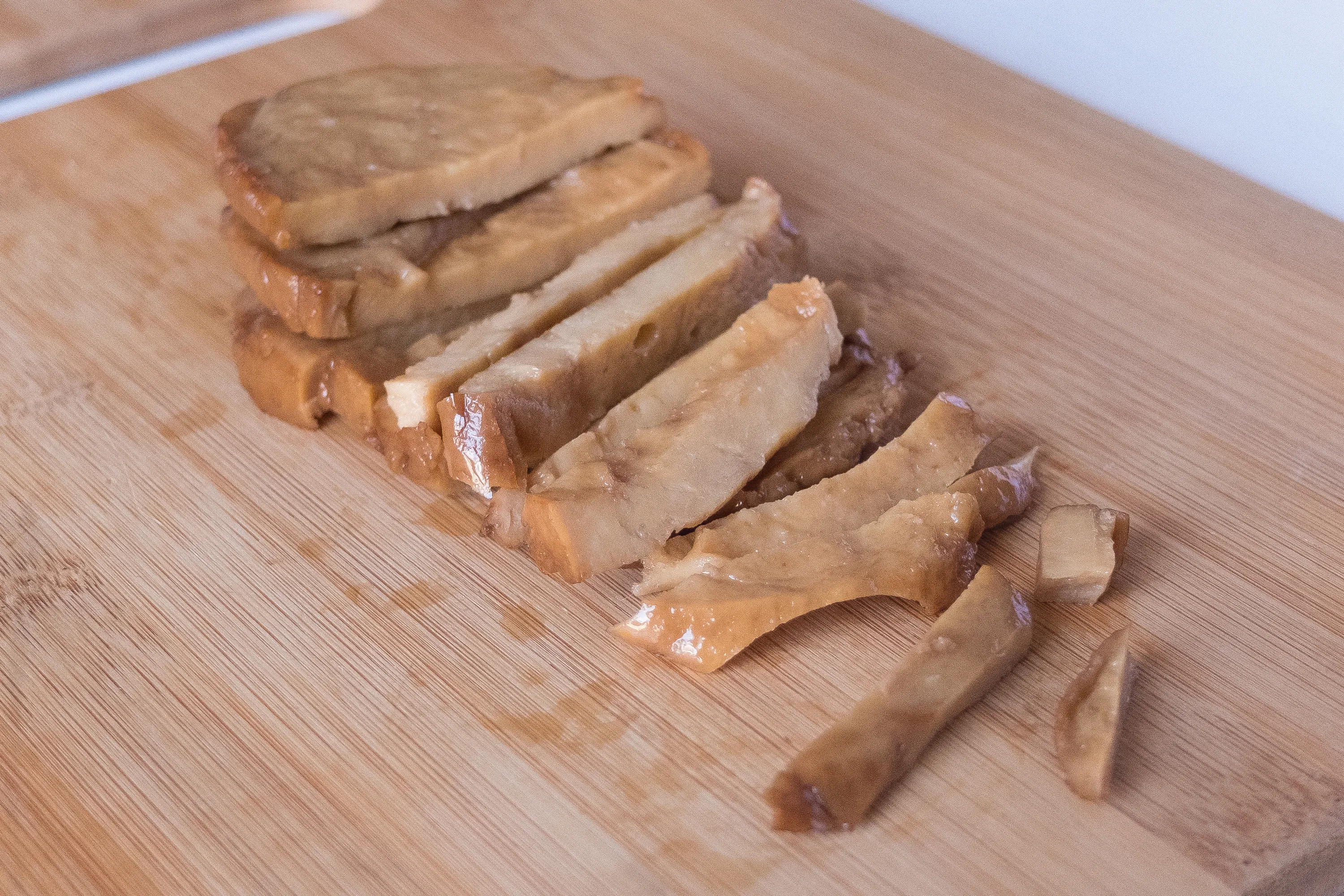
Seitan for Lifters: Make the Highest-Protein Plant Food at Home (Plus 4 Recipes)
Homemade seitan packs ~21g protein per 100g for pennies. The master recipe plus 4 lifter-friendly recipes with full macros, and the one amino acid catch.
By Ben B.

5 High-Protein Vegan Breakfasts (Each Packs 30g+ Protein)
Five vegan breakfasts with 30g+ protein each. Full recipes, real macros, zero protein powder. Breakfast is where lifters lose the protein game.
By Ben B.
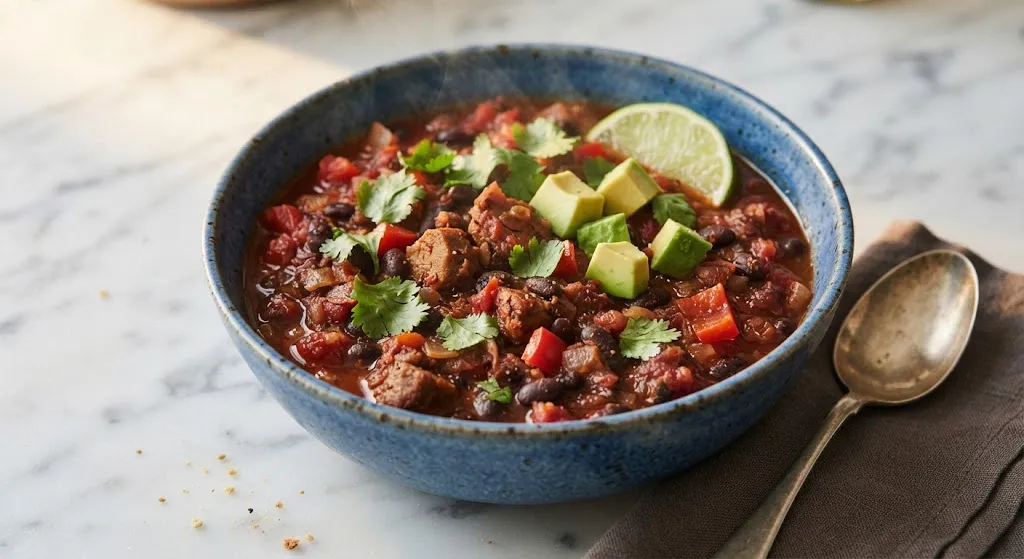
5 High-Protein Vegan Meal Prep Recipes (Each Packs 30g+ Protein)
Five make-ahead vegan meal prep recipes for lifters. Every serving packs 30g+ protein, with full ingredients, macros, and a 2-hour Sunday game plan.
By Ben B.