Seitan for Lifters: Make the Highest-Protein Plant Food at Home (Plus 4 Recipes)
Affiliate disclosure: Some links on this page may earn us a small commission at no cost to you.
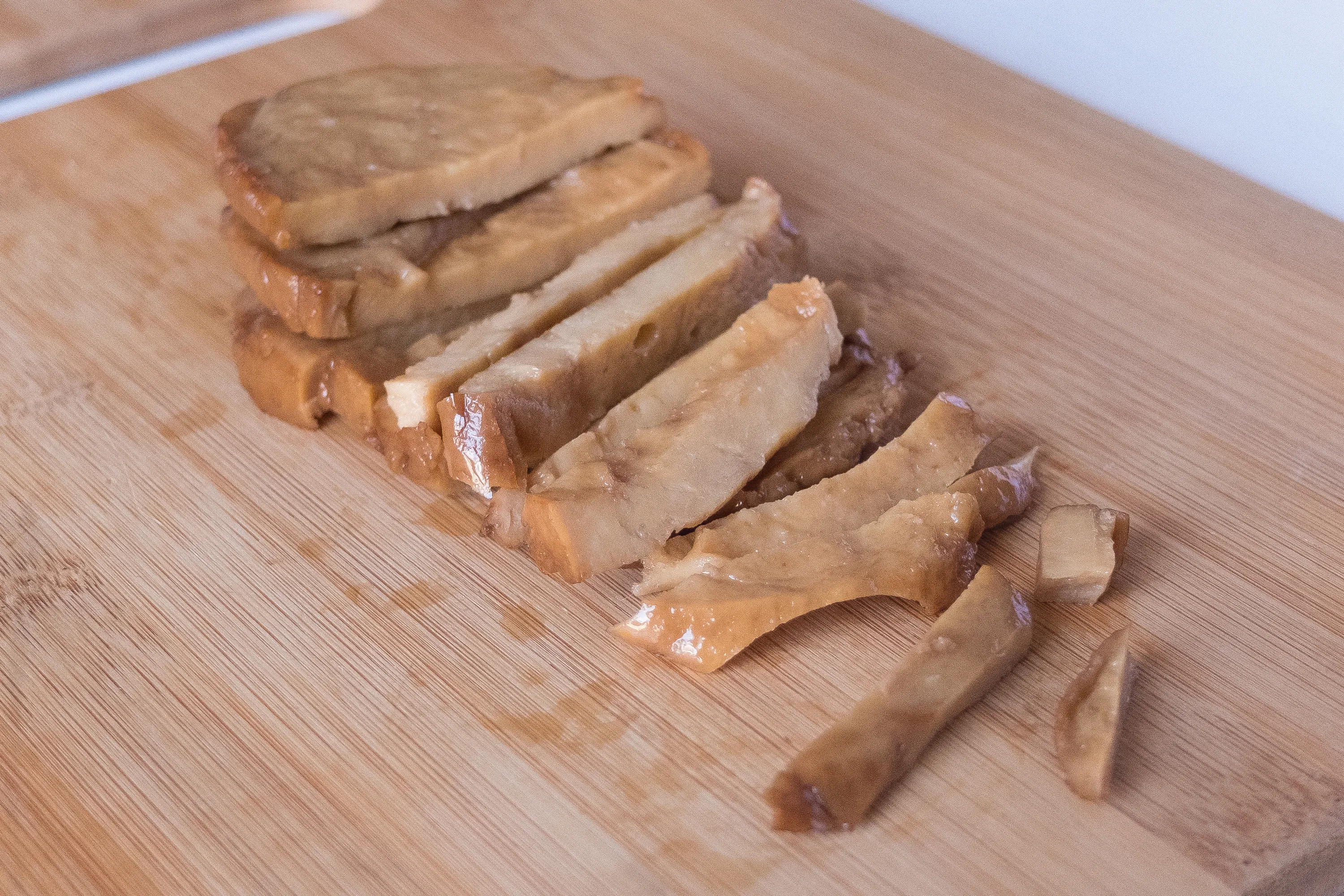
There’s a bag sitting in the baking aisle of your grocery store that contains 75 grams of protein per 100 grams. Not powder. Not a supplement with a shaker-bottle mascot. A bag of flour (vital wheat gluten) that the USDA’s own database lists at 75.2g protein per 100g, 370 calories, under 2 grams of fat. You mix it with water, knead it for five minutes, simmer it in broth, and it becomes seitan: chewy, savory, roughly 21 grams of protein per 100g cooked, at a cost of about two and a half dollars for a batch that yields five serious servings.
I ignored seitan for my first two years of vegan lifting because the store-bought packs annoyed me: four to six bucks for 8 ounces, a sodium number that read like a phone number, and a texture that ranged from decent to “chewing on a yoga mat.” Then I made it myself and got angry about the money I’d wasted. Homemade costs a fraction, you control the salt, and the texture is genuinely better because you decide how long to knead it. The one rule is absolute: never let it boil. Boiled seitan turns into a hockey puck. Simmered seitan turns into dinner.
This is the master recipe plus four things to actually do with it. Every one lands at 30+ grams of protein. And because honesty is the policy here, we’ll start with seitan’s one real flaw.
The lysine catch (and the 30-second fix)
Seitan’s protein is incomplete in one specific way: wheat protein is low in lysine, an essential amino acid. That’s not a dealbreaker. The ISSN’s position stand (Jäger et al., 2017) puts muscle-building protein needs at 1.4–2.0 g/kg/day, and no single food has to carry the whole amino acid profile alone. The fix is embarrassingly easy: eat your seitan alongside legumes or soy sometime during the day. Lentils, chickpeas, edamame, black beans, and tofu are all lysine-rich. Notice that two of the four recipes below pair seitan with beans or edamame on purpose. That’s not garnish strategy; that’s amino acid strategy.
The master recipe: basic seitan
This makes the cutlets you’ll use all week. The chickpea flour is optional but I always include it. It softens the chew slightly and smuggles in a little lysine.
Makes ~700g cooked seitan (about 5 servings)
Dry mix:
- 190g vital wheat gluten (about 1½ cups)
- 30g chickpea flour (about ¼ cup)
- 2 tbsp nutritional yeast
- 1 tsp garlic powder, 1 tsp onion powder, 1 tsp smoked paprika
- ½ tsp black pepper
Wet mix:
- 355ml (1½ cups) water or vegetable broth
- 3 tbsp tamari or soy sauce
- 1 tbsp olive oil
Simmering broth (big pot):
- 2 liters water
- 120ml (½ cup) tamari or soy sauce
- 2 bay leaves, a few garlic cloves, whatever sad vegetables need using
- Whisk the dry ingredients in a large bowl. Whisk the wet ingredients separately, then pour wet into dry and stir until a shaggy dough forms.
- Knead 3–5 minutes. You’re developing the gluten strands that give seitan its chew. The dough should go from lumpy to smooth and elastic, like an earlobe with ambition. Less kneading = softer, more kneading = chewier.
- Rest 10 minutes. Divide into 5–6 cutlets or tear into chunks.
- Bring the broth to a boil, then drop it to the barest simmer (lazy bubbles, not a rolling boil) before the seitan goes in. This is the whole game. Simmer 45–60 minutes, flipping once. The pieces will roughly double in size.
- Cool in the broth, then store submerged in broth in the fridge for up to 5 days. It also freezes well for 2–3 months.
Per 100g (rounded from USDA figures, honest not exact): ~115 kcal, 21g protein, 5g carbs, 1.5g fat. The full batch carries roughly 145g of protein. I did the math from the dry weights, since every simmering broth differs.
1. Garlic-Herb Seitan Cutlets
The workhorse. Sear a cutlet, eat it next to anything. This is the recipe for people who meal-prep on Sundays and need a protein anchor that survives reheating without complaint.
Serves 1
- 150g cooked seitan cutlet, sliced 1cm thick
- 1 tbsp olive oil
- 3 garlic cloves, smashed
- 1 tsp dried oregano, ½ tsp chili flakes
- Squeeze of lemon, salt to finish
Sear the slices in hot oil, 3 minutes a side, until the edges brown and crisp. In the last minute, throw in the garlic, oregano, and chili flakes. The garlic goes in late so it perfumes the oil instead of burning into bitterness. Finish with lemon and salt. Eat over rice, in a wrap, or standing at the counter like an animal.
Macros: ~330 kcal, 33g protein, 9g carbs, 17g fat.
2. Sticky Gochujang Seitan Bowls with Edamame Rice
The lysine fix, served as dinner. Gochujang (the fermented Korean chili paste) caramelizes into a lacquer that makes seitan taste like it came from a restaurant with a waitlist. Edamame on the rice covers the amino acid gap and adds another 11g of protein per 100g.
Serves 2
- 300g cooked seitan, torn into bite-size chunks
- 2 tbsp gochujang, 1 tbsp tamari, 1 tbsp maple syrup, 1 tsp rice vinegar
- 1 tbsp oil
- 200g cooked rice + 150g shelled edamame, warmed through
- Sesame seeds and sliced scallions
Whisk gochujang, tamari, maple, and vinegar. Sear the seitan in hot oil until the edges char, 4–5 minutes. Pour in the sauce and toss 2 minutes until it thickens into a sticky glaze. Gochujang burns if you walk away, so stay put. Serve over the edamame rice, shower with sesame and scallions.
Macros per serving: ~520 kcal, 38g protein, 58g carbs, 12g fat.
3. Smoky BBQ Pulled Seitan Sandwiches
Shredded seitan behaves like pulled pork in every way that matters: it drinks up sauce, crisps at the edges under heat, and piles onto a bun like it was born there. The shredding is the trick: use two forks on a warm cutlet and pull with the grain.
Serves 2
- 300g cooked seitan, shredded
- 120ml BBQ sauce (check it’s vegan; most are, honey is the usual traitor)
- 1 tsp smoked paprika, ½ tsp liquid smoke (optional but worth it)
- 1 tbsp oil
- 2 sturdy buns, coleslaw to top
Toss the shredded seitan with BBQ sauce, paprika, and liquid smoke. Sear in hot oil, pressing it down, 5–6 minutes until the edges char and crisp. Pile onto buns with coleslaw. The crunch-creamy-hot combination is doing structural work here; don’t skip the slaw.
Macros per serving (with bun and slaw): ~540 kcal, 36g protein, 66g carbs, 13g fat.
4. Seitan Philly Cheesesteak
Thin-sliced seitan, fried onions and peppers, melted vegan cheese, hoagie roll. This is the recipe that converts skeptics. The chew of seitan is genuinely closer to steak than any other plant protein, and a hot sandwich hides nothing.
Serves 2
- 300g cooked seitan, sliced as thin as you can manage
- 1 large onion, 1 bell pepper, sliced
- 1 tbsp oil + 1 tbsp tamari
- 2 hoagie rolls, 4 slices vegan cheese (or a drizzle of cashew cheese sauce)
Caramelize the onion and pepper in oil over medium heat, 10–12 minutes. Don’t rush this; the sweetness is the point. Push to the side, crank the heat, sear the seitan slices 3–4 minutes until the edges crisp. Splash in the tamari, toss everything together, lay the cheese over the top, cover 1 minute to melt. Load into the rolls.
Macros per serving: ~590 kcal, 36g protein, 68g carbs, 16g fat.
The economics, since that’s what sold me
A 4-pound bag of vital wheat gluten runs about $24. That works out to roughly $0.37 an ounce. The master batch above uses about 6.7 ounces of it, so around $2.50 in gluten plus pennies of broth and spices, for ~145g of protein. That’s under two cents per gram of protein, before you even count the chickpea flour. The store-bought packs I used to buy carried 55–70g of protein for four to six dollars. Making it yourself isn’t a hobby; it’s arbitrage.
Start with the master batch this weekend. Simmer, don’t boil. Pair it with beans. Your grocery bill and your deadlift will both notice.
Sources: USDA FoodData Central, vital wheat gluten (75.2g protein/100g); Jäger et al., “International Society of Sports Nutrition position stand: protein and exercise,” JISSN (2017). Cooked seitan figures rounded from dry-weight math; store-bought values are brand-dependent. Check your labels. Related: our high-protein vegan meal-prep recipes and 5 high-protein vegan breakfasts.
Keep reading
Tempeh for Lifters: The Fermented Protein Brick That Fixes Seitan's Weakness (Plus 4 Recipes)
Tempeh packs ~20g protein per 100g and fixes seitan's lysine problem. Four lifter recipes at 30g+ protein each, with full macros and a steam trick.
By Ben B.

5 High-Protein Vegan Breakfasts (Each Packs 30g+ Protein)
Five vegan breakfasts with 30g+ protein each. Full recipes, real macros, zero protein powder. Breakfast is where lifters lose the protein game.
By Ben B.
5 High-Protein Vegan Meal Prep Recipes (Each Packs 30g+ Protein)
Five make-ahead vegan meal prep recipes for lifters. Every serving packs 30g+ protein, with full ingredients, macros, and a 2-hour Sunday game plan.
By Ben B.