Vegan Protein Cost Comparison: Beans vs. Powder per 30g
Affiliate disclosure: Some links on this page may earn us a small commission at no cost to you.
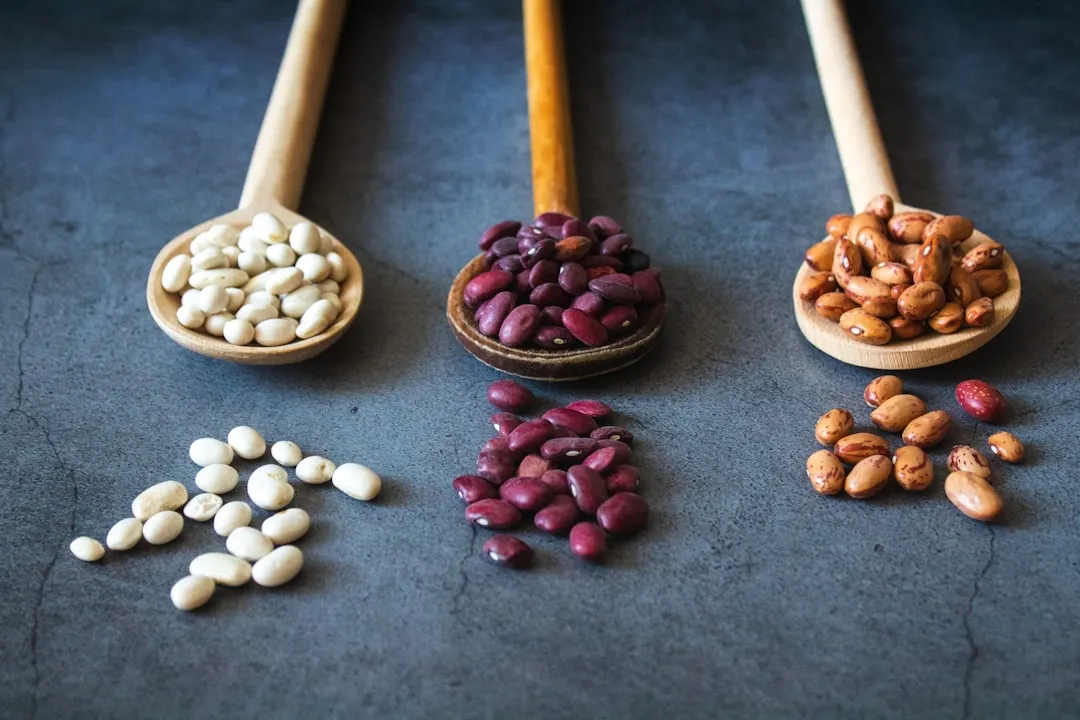
The sound of dried black beans hitting the bottom of a stockpot, that hard, dry rattle, is the sound of cheap protein. One pound of Goya black beans, retailing around $1.79 at my local grocery, yields close to 97 grams of protein once cooked. Do the division. That’s under two cents per gram, or roughly fifty cents for the 30 grams most people use as a benchmark serving.
The scoop of Naked Pea sitting next to your blender? Same 30 grams of protein will run you about a dollar twenty. Maybe a little less if you bought the five-pound tub on subscription.
On the surface, beans win so hard it feels like the conversation should end there. But I spent six years on a professional line where mise en place meant knowing exactly what each ingredient cost, what it yielded, and whether it was worth the labor. The real comparison lives in the details that the sticker price doesn’t show.
What 30 Grams of Protein Actually Costs
Let’s lay out the numbers clean, the way I’d prep a cost sheet for a restaurant walk-through. BLS average retail for dried beans sits at $1.69 per pound as of July 2026. A pound of dried black beans cooks up to about six and a half cups. Each cup delivers 15 grams of protein. Total yield: 97.5 grams. Cost per gram: $0.018. For your 30-gram target, you’re spending $0.54 in raw bean cost, and that’s before you account for the fact that cooking breaks down cell walls and marginally increases usable protein.
Canned beans change the math fast. A standard 15-ounce can of black beans runs about $0.99 and delivers roughly 24.5 grams of protein. To hit 30 grams, you need a little more than one can, about $1.20. Suddenly dried beans look like a steal and canned beans look like budget powder wearing a disguise.
Speaking of powder. Budget vegan protein powders cluster around three price tiers in 2026. Nutricost Organic Pea Protein — single ingredient, USDA organic — clocks in at $0.38 per serving for 20 grams of protein. That’s $0.57 per 30 grams, or $0.47 if you subscribe. Naked Pea in the five-pound tub runs $0.76 per serving at 18 grams per scoop, putting you at $1.27 per 30 grams (subscription drops it to about $1.02). Orgain Organic, a pea-and-rice blend available everywhere from Costco to Target, lands at roughly $0.90 per serving for 21 grams — about $1.29 per 30 grams.
So on pure sticker price, dried beans beat everything by a mile. Budget powder is in the same neighborhood as canned beans. And mid-range powders — your Garden of Life, your Ritual Essential — push past $1.50 per 30 grams. At that point you’re paying for branding, not protein.
The Protein Quality Problem Nobody Talks About at the Grocery Store
Here’s where the beans-vs.-powder conversation gets interesting, and where most cost comparisons fall apart.
Not all grams of protein are created equal. Your body doesn’t absorb and use every gram you eat with equal efficiency. Protein quality is measured by something called DIAAS, the Digestible Indispensable Amino Acid Score. It ranks how completely your body can break down and utilize the amino acids in a given food. Whole soy protein scores 0.98. Pea protein isolate scores around 0.82. Black beans? They land at 0.59.
That 0.59 means your body can only use about 59 percent of the protein in beans as effectively as it would use the same amount from a reference protein. The bottleneck is methionine, an essential amino acid that beans simply don’t contain in sufficient quantities. Your muscles need methionine for protein synthesis. Without enough of it, the extra grams get burned for energy or converted to glucose. You ate 30 grams of protein, but your body could only recruit about 17 to 18 of them for muscle repair and growth.
Run the real numbers. Dried beans at $0.018 per gram, discounted to 59 percent usable: effective cost is about $0.03 per usable gram. Nutricost pea protein at $0.019 per gram, discounted to 82 percent usable: about $0.023 per usable gram. The gap just shrank from enormous to modest — beans still win, but powder isn’t the ripoff it appears to be on sticker price alone.
That’s not a reason to stop eating beans. It’s a reason to eat them smart. Pair black beans with rice, oats, or bread — grains that supply the methionine beans lack but are themselves low in lysine. The combination creates a complete amino acid profile. Rice and beans isn’t just a cultural staple across Latin America, the Caribbean, and South Asia because it tastes good — though it does — it’s because the two foods fill each other’s amino acid gaps. This kind of complementary pairing is covered in more detail in our breakdown of 5 low-key fantastic sources of plant protein.
Canned Beans: The Convenience Tax
I get it. You worked a nine-hour shift, you crushed an hour at the gym, and the idea of soaking dried beans overnight feels like a betrayal of your remaining energy. Canned beans are there for you. They require a can opener, a colander, and roughly zero planning.
That convenience has a price. Canned black beans cost roughly four times more per gram of protein than dried. At $1.20 per 30 grams of protein, they’re now comparable to — or slightly more expensive than — budget pea protein powder. And unlike powder, canned beans still carry the DIAAS penalty unless you pair them with grains.
Canned beans are your emergency ration, not your foundation. If you’re building a vegan bodybuilding diet on a budget, buy the five-pound bag of dried beans. Spend an hour on Sunday cooking a week’s worth. Portion them into containers. That’s your mise en place for the week, chef. Everything measured, prepped, ready to go.
The line-cook shortcut: a pressure cooker. Dried black beans go from hard little stones to creamy and tender in 25 minutes under pressure. No soaking required. That drops your active prep time to about five minutes of rinsing and sorting. A $30 Instant Pot pays for itself in bean savings inside a month.
The Weekly Budget in Real Dollars
Let’s talk about what this looks like for an actual human trying to hit 150 grams of protein per day on a plant-based budget. That’s a realistic minimum for someone doing resistance training and trying to hold or build muscle.
Scenario one: dried beans only. You’d need about 10 cups of cooked beans per day. Cost: roughly $1.50. But you’d also be consuming around 2,500 calories just from beans, barely covering your methionine needs even with some rice pairing, and spending quality time with your bathroom. Don’t do this.
Scenario two: budget powder only. Six to seven scoops of Nutricost pea protein, about $2.66 per day at retail, less on subscription. Simple, complete, boring. Works if you can tolerate the taste and your stomach handles that volume of isolate.
Scenario three: the realistic mix. This is what I actually do, and what I’d recommend for anyone trying to eat well without overthinking every meal. Half your protein from whole foods (beans, tofu, lentils, tempeh) and half from a budget powder blended into your morning shake. For someone targeting 150 grams, that’s 75 grams from food and 75 grams from powder. The food portion costs roughly $2 to $3 per day depending on what you choose. The powder portion, at budget pricing, runs about $1.50 to $2.50. Total: $3.50 to $5.50 per day.
That’s not radically different from what a whey-based athlete would spend. The framing that vegan protein is inherently more expensive comes from people comparing premium organic pea isolate to bargain-basement whey concentrate. Compare dollar for dollar, and the gap closes fast, especially when you’re building your meals around whole foods and using plant-based diet for muscle growth principles to structure your plates.
Mid-Range Powders: Where the Markup Gets Absurd
I need to say this plainly, because I’ve watched too many people at the gym scoop out expensive powder like it’s magic dust.
Garden of Life Raw Organic runs about $0.08 per gram of protein. Ritual Essential, with its subscription model and minimalist branding, hits $0.10 per gram. That’s two to three times what you’d pay for Nutricost or Naked Pea for the same amino acids. Your muscles don’t read ingredient labels. They respond to total protein, leucine content, and whether you’re hitting your target consistently day after day.
If you want the best vegan protein powder for taste, texture, and mixability — and you’re willing to pay extra for that experience — that’s a valid choice. I’ve done it. But you’re paying for flavor and mouthfeel, not for superior muscle-building protein. Know the difference, and decide with your wallet wide open.
The Prep Time Question
Time is a real cost. It doesn’t show up on a receipt, but it shows up in your consistency, and consistency is the only variable that matters for long-term body composition.
If you meal prep on Sundays — soaking, cooking, and portioning a week’s worth of beans — your per-meal time investment drops to about two minutes of active work. Reheat, season, combine with rice or toss into a bowl. That’s manageable. That’s what kept me fed when I was coaching at the municipal gym and running my own training schedule.
But if you’re cooking dried beans fresh every night after a long day, that 90 minutes will kill your habit by Wednesday. Powder mixes in 30 seconds with water and a shaker bottle. The $0.50 to $1.00 per day premium on powder you actually consume every single day beats a cheaper bean habit you abandon when life gets busy. That’s not laziness. That’s adherence science, and it’s the same principle I learned on the line: the best mise en place is the one you’ll actually do.
How much protein is in a serving of beans vs. a scoop of powder?
One cup of cooked black beans has about 15 grams of protein. A standard vegan powder scoop delivers 20 to 30 grams depending on the brand. To match one scoop from beans alone, you need roughly two cups — a hefty bowl for one sitting.
Are beans a complete protein?
No. Beans are low in methionine. Pair them with rice, oats, or bread and you get a complete amino acid profile. This isn’t a biochemistry experiment — it’s Tuesday-night cooking.
Is vegan protein powder worth the extra cost over whole foods?
If convenience and leucine density for muscle protein synthesis are priorities, powder earns its price. Whole foods win on fiber, micronutrients, and raw per-dollar value. For most people, the right answer is both.
Can I hit 150 grams of protein per day on beans alone for under $2?
Raw protein math says yes — roughly $1.50 for 150 grams from dried beans. Practically, no. You’d miss methionine, overload on calories, and deal with serious digestive discomfort at that volume. Supplement with powder.
Does cooking method affect the protein content of beans?
Minimal change. Pressure cooking breaks down anti-nutrients slightly better than stovetop boiling, which can marginally improve digestible protein. The difference is small enough that it shouldn’t drive your food decisions. Cook them however you’ll actually eat them.
Keep reading
Vegan BodyBuilding Diet: A 7-Day Meal Plan
Want to build muscle on plants? This vegan bodybuilding diet guide covers protein targets, foods to eat and avoid, key nutrients, and a sample 7-day meal plan.
By Prakash B.
Top 6 Nuts For Protein Content
The word nut refers to a wide range of products in the culinary sense. Basically, nuts are dry edible fruits or seeds with high fat content. They are also…
By Prakash B.
Post Workout Meal For Vegetarians
What should you eat after a workout on a plant-based diet? Here are high-protein vegetarian post-workout meals, snacks, and timing tips to recover faster.
By Prakash B.