Best Vegan Protein Powders 2026: The Lifter's Guide to Buying Right
Affiliate disclosure: Some links on this page may earn us a small commission at no cost to you.
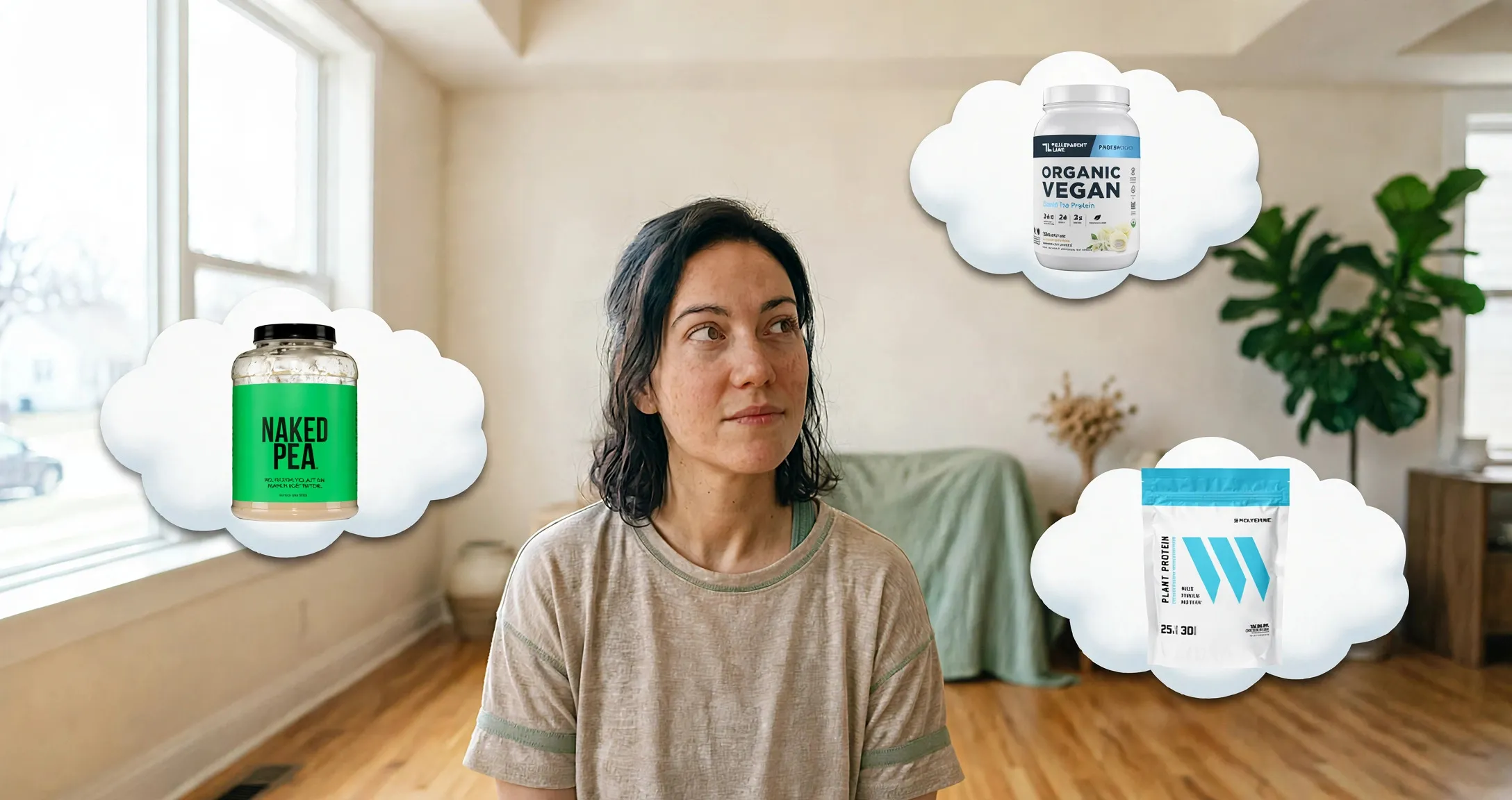
I have bought more protein tubs than I care to admit. Some tasted like cake batter. Some had to be choked down while holding my nose. One smelled, I swear, like a petting zoo. Along the way I learned that buying vegan protein powder is not really about the rankings. Every “best of” list on the internet recycles the same brands in a different order. What actually matters is knowing what the numbers on the tub mean.
Don’t worry, I’ll still give you my top 5. Before we get to that though, let’s talk about what to look for in your chosen powder and what you should be aware of before going all in.
Start with what the tub should say
Strip away the flavors, the “proprietary blends,” and the athlete photos. A protein powder for a lifter has exactly one job: deliver a meaningful dose of complete protein. Everything else is noise.
The International Society of Sports Nutrition’s position on protein gives us the numbers. For building and maintaining muscle, most training adults should eat 1.4 to 2.0 grams of protein per kilogram of body weight per day. For a 180-pound lifter, that is roughly 115 to 165 grams daily. Per serving, the ISSN suggests 20 to 40 grams of high-quality protein, ideally containing 700 to 3,000 mg of leucine, the amino acid that flips the switch on muscle protein synthesis.
That gives you a dead-simple checklist for any tub:
At least 20 grams of protein per serving. Below that and you are paying for flavored fiber. The sweet spot is 20 to 30 grams.
A complete amino acid profile. Pea protein is strong on leucine, isoleucine, and valine (the branched-chain amino acids that matter most for muscle) but low in methionine. Rice protein is the mirror image. Put them together and the weaknesses cancel out. This is why nearly every good vegan powder is a pea and rice blend. It’s a proven formula, not a gimmick. A 12-week randomized trial found pea protein produced muscle-thickness gains comparable to whey (Babault et al., Journal of the International Society of Sports Nutrition, 2015). The protein works, the amino acids just have to cover each other.
Third-party testing. The supplement industry is famously under-regulated. A seal from an independent tester like Informed Sport or NSF means someone other than the manufacturer checked that the tub contains what the label claims and nothing it does not. I treat this as a requirement, not a bonus.
An ingredient list you can read. Five to ten ingredients you recognize. If there is a “proprietary blend” hiding the amounts, the manufacturer is telling you something by refusing to tell you something.
Lead? In my protein?
In October 2025, Consumer Reports tested 23 popular protein powders and ready-to-drink shakes. More than two-thirds contained more lead in a single serving than the organization’s experts say is safe for an entire day. Some samples were over ten times that benchmark. Plant-based powders were the worst offenders by a wide margin: on average, nine times the lead levels of dairy-based powders. Cocoa was a big contributor too, which is a bummer, because chocolate is the flavor everybody buys.
Before you throw your tub in the trash, consider this: lead and cadmium occur naturally in soil, and plants absorb them. Pea and rice plants concentrate more metals than dairy-processing milk, so this is partly a geology problem, not a poisoning scandal. The supplement trade group pushed back, arguing that modern tests detect trace amounts that do not necessarily equal a health hazard. The FDA said it was reviewing the findings.
In my opinion, the levels found were not an emergency, but they were not nothing either. Nobody can promise you a zero-lead powder because lead is present in soil. What you can do:
- Use some unflavored or go vanilla. Chocolate powders consistently test higher because cocoa adds its own metal load. If you’re like me and love your chocolate, consider mixing half-and-half with unflavored powder.
- Buy from brands that third-party test. A clean certificate will not erase the metals, but it means someone is measuring them and stopping any truly dangerous batches.
- Keep powder as a supplement, not a food group. If you are hitting your 1.6 g/kg from tofu, tempeh, lentils, and seitan, one scoop a day is all you need the tub for.
Five powders worth buying in 2026
The quality pick: Transparent Labs Organic Vegan
24 grams of protein per serving from organic pea isolate and rice protein, with an ingredient list that fits on a napkin. Third-party tested through Informed Sport, no artificial sweeteners (stevia only), no added sugar. At roughly $1.66 per serving ($49.99 for 30 servings), it costs more than the budget options but it is the tub I would buy if I only got one. Only two flavors (chocolate and French vanilla), and the stevia bothers some people but I’ve never had an issue with it.
The budget pick: Naked Pea
This is the one that makes the economics embarrassing for everyone else: 25 to 27 grams of protein per serving at about $1.16 a serving, and the ingredient list is literally pea protein isolate plus natural flavors depending on the flavor. No additives, no filler, mild taste that disappears in a smoothie. If your only goal is hitting your protein number cheaply, start here and stop reading. Keep the amino acid profile in mind though and look to supplement with your other foods.
The athlete pick: Momentous Essential Plant-Based
20 grams from pea and rice, third-party tested, no artificial sweeteners, gluten-free. BarBend’s reviewers gave it top marks for formulation and solubility, with the caveat that the texture is slightly sandy and there are only 20 servings per tub at $2.27 a serving. It is overpriced per gram of protein, honestly. But if you compete and want the most certified, most conservative option available, this is it.
The mainstream pick: Optimum Nutrition Gold Standard 100% Plant
24 grams of protein and 4.5 grams of BCAAs from a pea, brown rice, and chickpea blend. Optimum Nutrition is one of the biggest names in the industry, which cuts both ways: wide availability and consistent quality, but you pay a brand premium and some users report it dissolves better in room-temperature liquid than cold. For the lifter who wants to grab something reliable at any supplement shop, this is the default.
The taste pick: Swolverine Plant Protein
25 grams from pea isolate and pumpkin protein, third-party tested, at about $2.10 a serving. Men’s Journal’s 2026 awards named it the best vegan protein of the year, mostly on taste and mixability. Having flavors like salted caramel and chocolate cake is a nice touch, and this is the rare plant powder people describe as actually enjoyable with just water. Slightly premium price, but it’s a fantastic pick when you’re looking to switch things up!
What I skip
- Powders under 20 grams per serving. If it is 12 grams of protein and 18 ingredients, it is a smoothie ingredient with ambitions.
- Proprietary blends. “Muscle Matrix 3000” means the good stuff is underdosed and the label is overdesigned.
- Kitchen-sink blends with greens, adaptogens, and probiotics at fairy-dust doses. A pinch of spirulina does nothing. Buy a plain powder and eat vegetables.
- Anything with sugar alcohols as the main sweetener. Sorbitol and erythritol are more likely to cause stomach issues than the stevia-sweetened brands. It’s a no from me.
- Hype brands with no testing and a paid army of reviews. If the loudest thing about a powder is its marketing budget, keep walking.
How to actually use it
One more piece of practical advice, since the buying part is only half the battle. Distribute your protein across the day, roughly every 3 to 4 hours, per the ISSN’s guidance. The post-workout window is real but less urgent than the old magazine wisdom suggested; total daily intake does the heavy lifting. A shake after training is mostly valuable because it is the easiest way to guarantee a 25-gram dose lands somewhere in your day.
Also, do not let the powder become a crutch for a thin diet. Our beans vs. powder cost comparison showed the economics, but the bigger point is that tempeh, tofu, seitan, and lentils carry fiber, micronutrients, and satiety that powder never will. The tub exists to fill the gap between what you ate and what your muscles need. That is all it has to do, and the five options above should give you plenty of delicious options!
Sources: International Society of Sports Nutrition position stand on protein and exercise (JISSN 2017); Babault et al., JISSN 2015 (pea vs. whey); Consumer Reports protein powder testing, October 2025 (reported by NPR, October 22, 2025); BarBend 2026 vegan protein reviews; Garage Gym Reviews Transparent Labs testing.
Keep reading
Creatine for Vegan Lifters: The One Supplement Actually Worth Buying
Creatine is the most studied supplement in fitness, and plant-based lifters may benefit most. Dosage, myths, and what to buy.
By Ben B.
Vegan Protein Cost Comparison: Beans vs. Powder per 30g
Real per-gram math on dried beans, canned beans, and vegan protein powder, so you can stop guessing and start budgeting.
By Dante C.
Top 6 Nuts For Protein Content
Which nuts have the most protein? Peanuts, almonds, pistachios, cashews, walnuts, and hazelnuts, ranked with real per-ounce numbers.
By Prakash B.