Vegan Keto Diet Plan And Food List
Affiliate disclosure: Some links on this page may earn us a small commission at no cost to you.
Vegan Keto: The Short Version
A ketogenic diet is a very-low-carbohydrate diet where fat and protein replace carbs as the body’s main fuel. A vegan keto diet does the same thing with zero animal products: the carbs get replaced by plant fats and plant protein instead of butter and bacon.
Standard keto macros look roughly like this:
- Fat: 70%
- Protein: 25%
- Carbohydrates: 5%
That’s the hard part for vegans. The classic vegan staples, beans, lentils, rice, oats, fruit, are exactly the foods keto eliminates. What’s left is a narrower menu than either diet alone, which is why vegan keto has a reputation for being brutal. It’s doable, but go in with your eyes open.
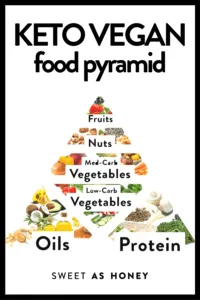
Img Source: Sweet As Honey
Foods to Avoid Entirely
If you’re new to vegan eating, the baseline exclusions first: meat, poultry, dairy, eggs, seafood, and animal-derived ingredients like whey protein and honey.
Then keto adds its own hit list. Grains, legumes, starchy vegetables, and most fruit are out, even though they’re perfectly good foods on any other vegan diet. Here’s the simplified avoid list:
- Grains and starches: bread, pasta, rice, cereal, baked goods
- Beans and legumes: black beans, chickpeas, kidney beans, lentils
- Starchy vegetables: potatoes, sweet potatoes, winter squash, beets, peas, carrots, corn, parsnips
- Sugary drinks and sweeteners: soda, juice, smoothies, sports drinks, sugar, agave, maple syrup
- Most fruit: bananas, apples, oranges (small portions of berries are the exception)
- High-carb alcohol: beer, sweet cocktails, most wine
- High-carb sauces and condiments: barbecue sauce, sweetened dressings, sugary marinades
- Highly processed foods in general
Yes, beans and lentils are excellent vegan protein sources. They’re just too carb-heavy for ketosis, so they sit this one out.
What You Actually Eat
| Fats | Protein | Veggies | Nuts and Seeds |
|---|---|---|---|
| Avocado oil, olive oil, coconut oil, MCT oil, avocado | Tofu, tempeh, nutritional yeast, seitan | Spinach, arugula, Swiss chard, broccoli, lettuce, cauliflower, peppers, cabbage, asparagus, tomatoes, radish, onion, kale, mushroom, Brussels sprouts, zucchini | Almonds, macadamia nuts, pecans, pistachios, walnuts, cashews, hemp seeds, chia seeds, pumpkin seeds |
Fruits (small portions): blackberries, blueberries, raspberries, strawberries.
Fats
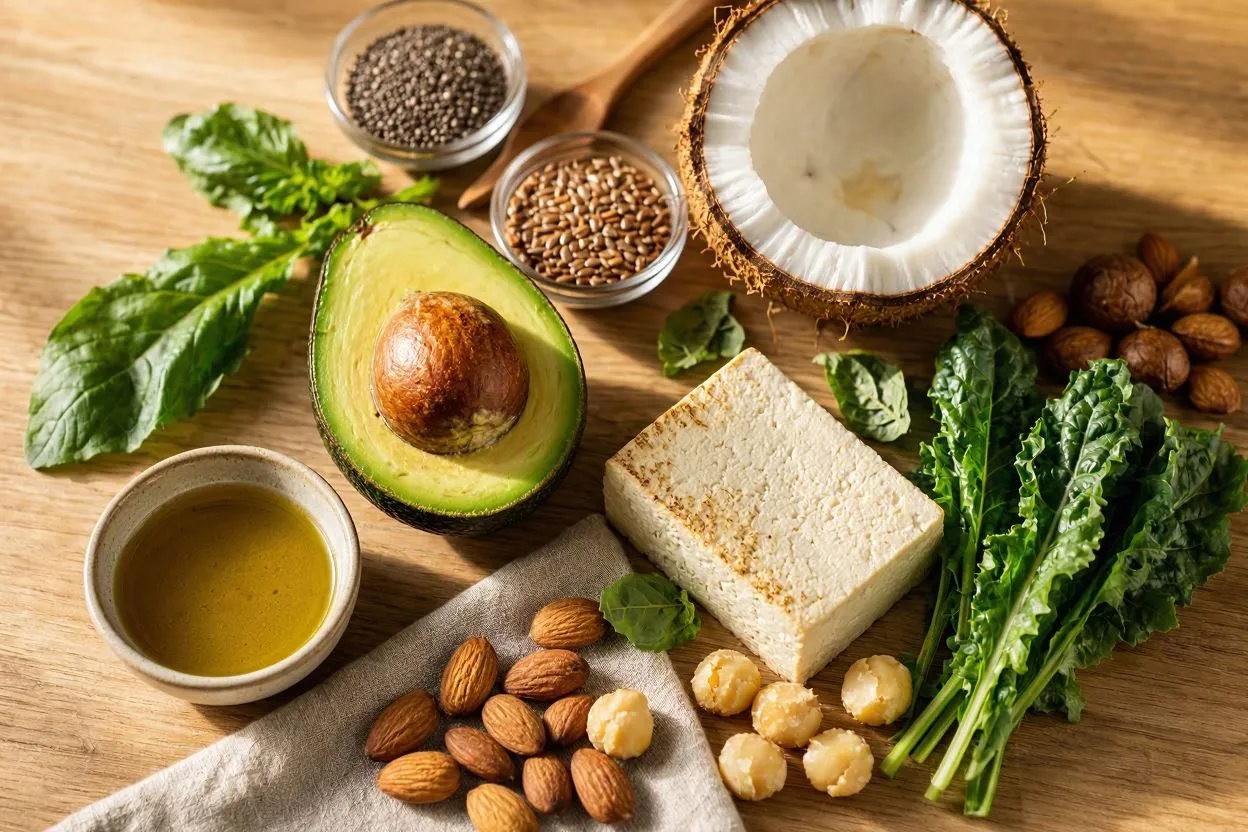
Coconut oil, olive oil, avocado oil, MCT oil, avocados, and nuts and seeds are the foundation. Cook with them, drizzle them on salads, blend them into sauces. A spicy cashew queso over broccoli or a coconut-milk matcha latte in the evening both do real work here. Macadamia nuts deserve special mention: extremely low carb, very high fat, genuinely delicious.
Protein
Tofu and tempeh are the workhorses if you’re fine with soy. Seitan (vital wheat gluten, about 25g protein per 100g) is the other big one, with a chew that scratches the meaty itch for a lot of people. Check labels on packaged meat substitutes, since marinades sneak in carbs. And when you’re near your carb ceiling but short on protein, a scoop of pea or hemp protein powder solves the problem cleanly. See our best vegan protein powder picks if you need one.
Nutritional yeast (about 8g protein per quarter cup, plus a genuine cheesy flavor) belongs in everything.
For more plant protein ideas that fit a low-carb approach, see 5 low-key fantastic sources of plant protein.
Vegetables and fruit
Above-ground vegetables are your friends: leafy greens, broccoli, cauliflower, zucchini, mushrooms, peppers, green beans, cabbage, asparagus, Brussels sprouts. Fruit is limited to small servings of berries. Nobody ever got kicked out of ketosis by six raspberries, but a whole tub is a different story.
The full eat list
- Coconut products: coconut cream, full-fat coconut milk, unsweetened shredded coconut
- Oils: olive, coconut, MCT, avocado
- Nuts and seeds: almonds, Brazil nuts, walnuts, macadamias, hemp, chia, pumpkin, flax
- Nut and seed butters: peanut, almond, sunflower, cashew (natural, no added sugar)
- Non-starchy vegetables: leafy greens, cruciferous veg, zucchini, peppers, mushrooms
- Protein sources: full-fat tofu, tempeh, seitan, pea or hemp protein powder
- Vegan full-fat “dairy”: coconut yogurt, vegan butter, cashew cheese, vegan cream cheese
- Avocados and guacamole
- Berries in moderation
- Condiments: nutritional yeast, herbs, lemon juice, salt, pepper, spices, stevia
- Seaweed: nori, kelp, dulse
Does It Work? What the Research Says
The honest answer: the evidence for vegan keto specifically is thin, but the evidence for low-carb vegan eating is better than most people expect.
The landmark study is the “Eco-Atkins” trial. Researchers at the University of Toronto randomized 39 overweight adults to either a low-carb vegan diet (26% carbs, 31% protein, 43% fat, built on soy, gluten, nuts, and vegetable oils) or a high-carb lacto-ovo vegetarian diet for six months. The vegan low-carb group lost more weight (6.9 kg vs 5.8 kg) and saw bigger drops in LDL cholesterol and triglycerides. (Jenkins et al., BMJ Open 2014)
Note the macros there: 26% carbs is low-carb, not the 5% of strict keto. A true 5%-carb vegan diet is harder to sustain and hasn’t been studied the same way. Early weight loss on keto can also be fast, but a meaningful chunk of that is water weight in the first week or two, not fat. Don’t confuse the two.
If weight loss is the main goal rather than ketosis itself, our vegan diet for weight loss guide covers approaches with more evidence behind them.
Risks and Who Should Skip It
Vegan keto stacks the restrictions of two demanding diets, so the risks of both apply and the nutrient gaps get wider. The known issues:
- Keto flu in the first week or two: nausea, headaches, low energy, dizziness, sleep disruption, digestive upset
- Constipation from the sudden drop in fiber
- Nutrient deficiencies: calcium, iron, vitamin D, B12, zinc, and omega-3s all need deliberate planning, likely including supplements
- Kidney stones and low blood pressure in susceptible people
- Heart concerns if “high fat” turns into a free pass for processed oils and refined coconut products
Skip this diet, or at minimum get medical supervision first, if you are pregnant or breastfeeding, have diabetes, liver, pancreas, thyroid, or gallbladder issues, or have any history of disordered eating.
This is not a diet to wing. If you try it, plan your meals, track your food for at least the first few weeks, and supplement deliberately rather than hoping for the best.
The Bottom Line
Vegan keto is the hardest common way to eat vegan, and the evidence supports a low-carb vegan approach more than a strict keto one. It can work for weight loss and cholesterol, but the restrictiveness is the price of admission, and most people underestimate that price. If you want the benefits with a fraction of the suffering, a whole-food vegan diet with moderate carbs has far more research behind it. Choose the diet you’ll still be eating in a year.
Keep reading
Best Vegan Protein Powders 2026: Buyer's Guide
What actually matters when buying vegan protein powder in 2026, the lead-in-protein findings explained, and 5 top-tier picks.
By Dante C.
Creatine for Vegan Lifters: The One Supplement Actually Worth Buying
Creatine is the most studied supplement in fitness, and plant-based lifters may benefit most. Dosage, myths, and what to buy.
By Ben B.

How to Choose a Vegan Eating Plan That Actually Works
Not sure which vegan diet approach fits your goals? Learn the 6 eating archetypes and find the one that matches your lifestyle.
By Ben B.