How To Fuel Your Workouts With A Plant-Based Diet
Affiliate disclosure: Some links on this page may earn us a small commission at no cost to you.
The first time I trained fasted because some forum told me it “burns more fat,” I nearly blacked out on rep eight of a warmup set. Lesson learned: the engine needs fuel, and plants are perfectly good fuel. The only trick is matching what you eat to what the session demands. A long run and a heavy squat day are not the same event, and they should not eat the same pre-game meal.
Here is how I think about it, broken into the four kinds of sessions most of us actually do. The short version of every section: carbs before, protein and carbs after, and nothing weird that your stomach has not met before.
1. Long-Distance Running

Running keeps you fit and supports a healthy cardiovascular system
Distance running is a carb-burning enterprise. Glycogen is your gas tank, and a long run drains it. Aim for roughly half your calories from carbs on days built around running, and lean toward complex carbs in the hours before, with faster sugars available during.
Foods to eat before your run:
- Beets
- Fruit
- Whole-grain toast with bananas
- Sweet potatoes
During your run:
- Dried fruit (raisins were my choice)
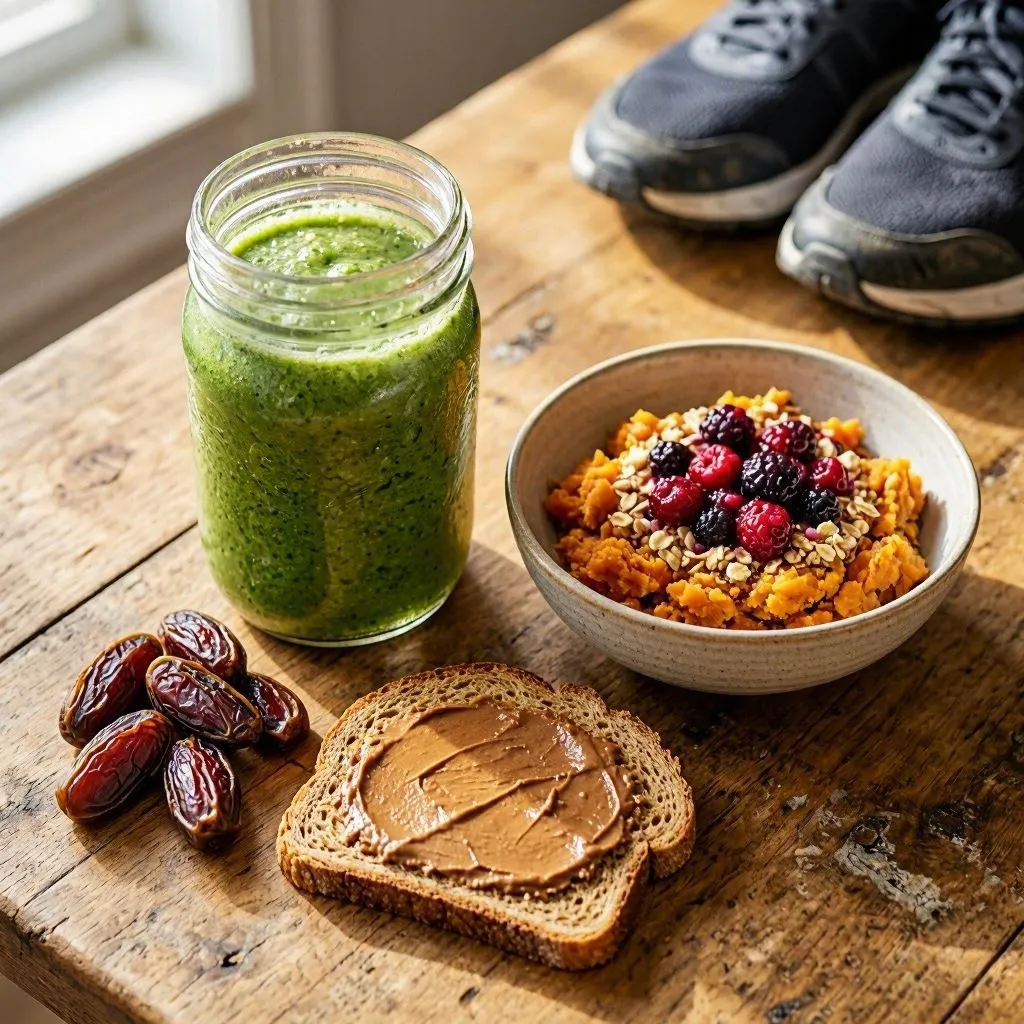
- Dates
After your run:
- Nutritional yeast
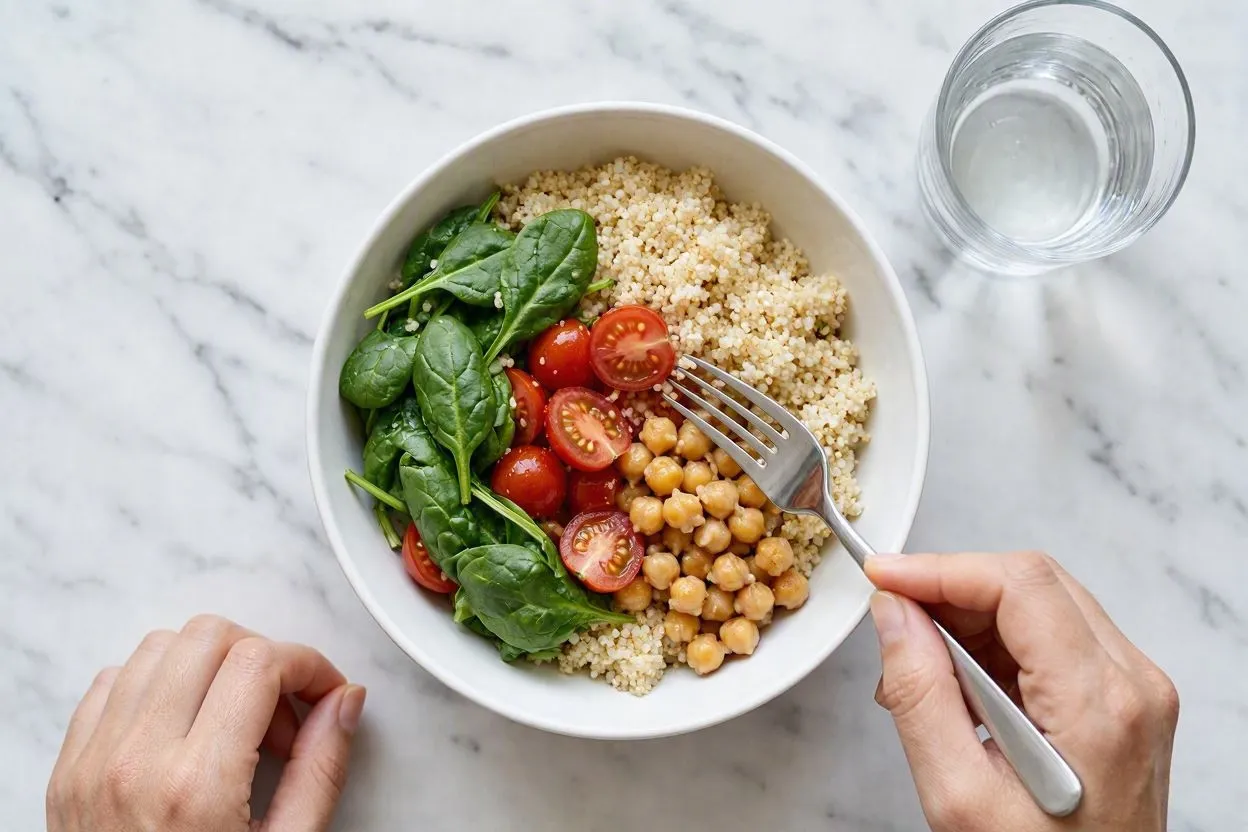
- A large salad with a base of dark leafy greens, beans, and a handful of nuts
- A brown rice-based bowl paired with your choice of vegetables and beans
- A smoothie with dark leafy greens, fruits, and seeds
2. High-Intensity Interval Training

HIIT workouts burn a massive amount of calories
HIIT is short and violent. The sessions are brief, but the effort is maximal, usually with less than 20 seconds of rest between bursts. You do not need a huge meal here. You need something light that clears the stomach fast and tops off blood sugar.
Eat a small handful of dates or nuts if you need something between rounds, and stay on top of water. HIIT on a dehydrated body feels like training at altitude, except the altitude is your own poor planning.
Foods to eat before a HIIT session:
- Sweet potato
- Whole-grain oatmeal with fruit
- Dark leafy greens paired with fruit
- Fresh fruit
Foods to eat after a HIIT session:
- Dates
- Whole-grain pasta with vegetables and tomato sauce
- A smoothie with fruits, dark leafy greens, and seeds
3. Circuit Training

Resistance bands are versatile and can be used to work out multiple muscle groups
Circuit training is HIIT’s close cousin: exercises repeated with minimal rest at a rapid pace, using resistance machines, bodyweight, or whatever you have. Same fueling logic applies. Carbs before for the bursts, protein and carbs after for the repair.
Foods to eat before circuit training:
- Whole-grain, old-fashioned oatmeal
- Fresh fruit
- Potatoes (preferably sweet potatoes)
- Dried fruit with no added sugar
Foods to eat after circuit training:
- Whole-grain oatmeal with nut butter and fruit
- A smoothie with your choice of fruit, dark greens, seeds, and plant-based milk
- A large salad with a base of dark leafy greens and your choice of beans
- A legume-based veggie burger with a whole-grain bun
4. Weightlifting

Lifting weights builds muscle quickly
Weightlifting runs on explosive bursts with real rest between sets, up to two or three minutes on heavy compounds. The session is longer, the recovery is longer, and the refueling matters more than in a 20-minute circuit. Eat something substantial beforehand, and get protein plus carbs in afterward. For full meal ideas built around recovery, see our post-workout meal guide.
Foods to eat before your weightlifting session:
- Whole-grain oatmeal with dried fruit and nut butter
- A smoothie with dark leafy greens, high-carb fruits, and nuts
- Whole-grain toast with nut butter
Foods to eat after your weightlifting session:
- Tofu or edamame
- Raw vegetables and hummus
- A smoothie with high-carb fruits, nuts, and dark leafy greens
The bottom line
A plant-based diet provides ample nutrition to fuel any type of workout. Eat a variety of whole grains, fruits, vegetables, legumes, and nuts, match your carbs to the session’s demands, and stop training fasted because a forum told you to.
Struggling to get enough protein to support muscle growth? Check out 5 low-key fantastic sources of plant protein for easy ways to raise your intake.
Not sure which eating approach fits your goals? Take the Vegan Eating Plan Quiz to find your personalized archetype in 7 questions.
Keep reading
5 Plant-Based Diet Effects on Body and Brain
What does a plant-based diet do to your body and brain? Five evidence-backed effects, from heart health and digestion to energy, sleep, and memory.
By Ben B.

Breaking Through a Strength Plateau: How to Start Progressing Again
Stuck at the same weight for weeks? How to audit your training, fix the real cause of a strength plateau, and start progressing again.
By Ben B.

Deload Weeks Done Right: A Lifter's Guide
A deload week is not quitting. It's the fatigue-management tool competitive lifters use every 4-8 weeks. Here's the science and the exact protocol.
By Ben B.