Plant-Based Diet for Muscle Growth
Affiliate disclosure: Some links on this page may earn us a small commission at no cost to you.
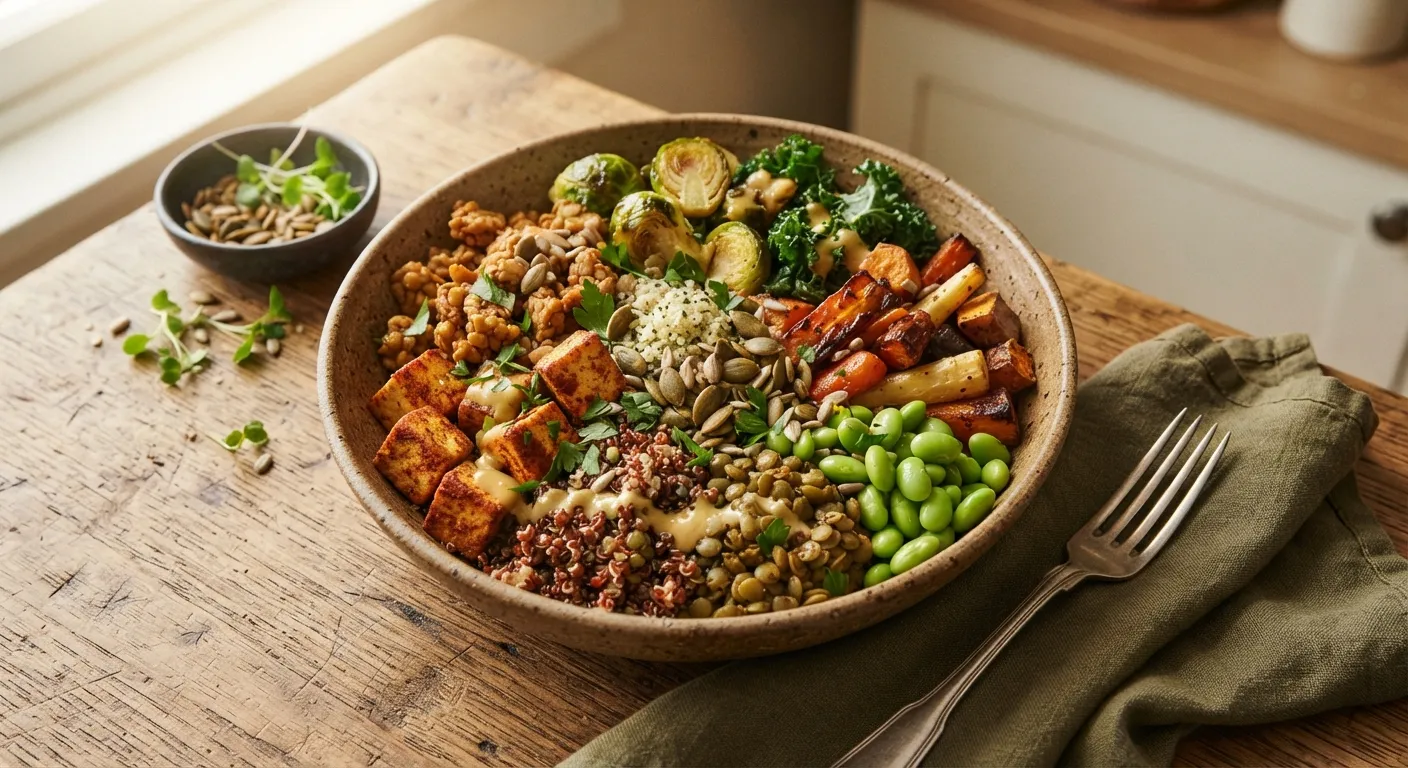
The truth is that you don’t have to eat meat to gain muscle! Plant-based foods can provide plenty of protein for getting shredded. In fact, when done correctly, it can be a very tasty and healthy alternative to an omnivore diet. Let’s dive in!
Lots of Protein
The first and most obvious step is getting plenty of protein. Muscles rely on protein for repair and growth. Your body uses amino acids in the proteins to rebuild and strengthen muscles. For consistent gains, you need consistent protein. There are many plant-based options for protein, including lentils, chickpeas, quinoa, nuts (or nut mylk), and vegan protein powders.
How much protein do you need? It depends on your goals. The recommended dietary allowance (RDA) for a sedentary adult is about 0.8 grams of protein per kilogram of body weight — roughly 0.36 grams per pound. For example, if you weigh 150 pounds (68.2 kg), that comes to about 54.5 g of protein every day. However, active individuals who lift weights regularly may benefit from significantly more — research suggests 1.2 to 2.0 grams per kilogram (about 0.5 to 0.9 grams per pound) to support muscle repair and growth. Of course, protein needs vary from person to person, so talk to your doctor or dietitian before starting a new diet plan. Keep in mind that very large surpluses of protein are not efficiently stored as fat, but they can displace other important macronutrients from your diet.
Plenty of Calories
While protein is an important factor, it’s not the only thing you need to put on muscle. Your diet needs to contain enough calories to power you through workouts. The more you exercise, the more calories you will need. Generally speaking, a beginner male lifter needs about 18 calories per pound of body weight, or 8.2 calories per kilogram. Going back to our previous example, if you weigh 150 pounds, you need to eat 2700+ calories per day. That’s a lot of calories!
It’s also important to make sure you balance the sources of your calories. Different plants have different amino acids, and your body needs the proper mix for good muscle growth. For example, wheat and rice have lots of methionine (an amino acid), but do not contain as much lysine (another amino acid) as some other foods. Beans and peas have good amounts of lysine, but do not contain as much methionine. Nuts and nut mylk are generally low in both lysine and methionine, but contain a number of other essential amino acids. By eating a variety of foods, you can achieve a better balance that will accommodate better muscle growth.
Vitamins and Minerals
So far, we’ve been focused on overall calorie intake and protein content. However, vitamins and minerals are also crucial to maintaining a body that is healthy enough to sustain muscle growth. Eating greens such as turnip greens or kale provides calcium, an important mineral for bone strength. Vitamin B12 is another critical nutrient. It supports healthy blood cells and iron retention. Nut mylk is an excellent source of B12. Other options include nutritional yeast and enriched cereals. Zinc supports the body’s immune system, keeping you in the gym and growing stronger. Pumpkin seeds and beans are both good sources of zinc. Lastly, omega-3 fatty acids keep the heart healthy and ready to work. Sources of omega-3 fatty acids include walnuts, soybeans, and flaxseed. Ensure your diet includes a healthy balance of vitamins and minerals to keep your body in tip-top shape!
Conclusion
A vegan diet for adding muscle mass is achievable, healthy, and delicious! While it does take some work to make sure all essential nutrients are included, the benefits are definitely worth it. Get started by talking to your doctor or dietitian and keep an eye on our blog for more tips and tricks!
Keep reading
5 Absolutely Amazing Effects Of A Plant-Based Diet on the Body And Brain
In a world where we are bombarded with information on the newest fad diet or the latest health craze, it can be hard to sift through everything and figure…
By Ben
Kendrick Farris – Olympic Powerhouse
Kendrick Farris is a vegan Olympic weightlifter who competed on behalf of the United States in…
By Ben
Pros and Cons of Not Eating Meat
Pros and Cons of Not Eating Meat: A Closer Look At Plant-Based Eating Animal meat has been a staple of the human diet for thousands of years, but recently…
By Ben